Renting Game Servers From NAS Servers

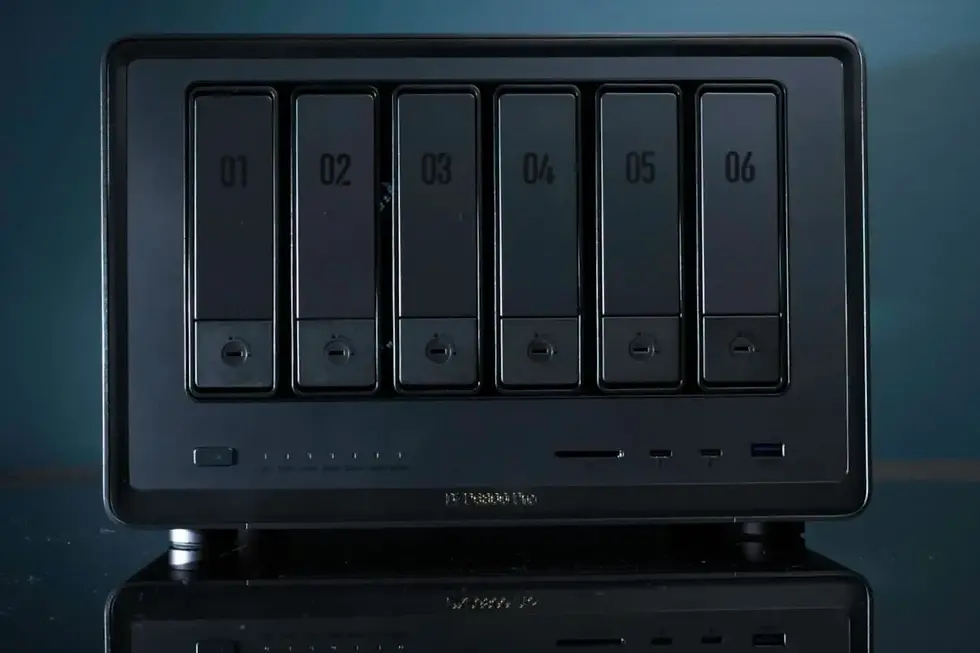
Renting Out Game Servers From A NAS Server
Let me be direct: running a game server hosting business off a NAS is like trying to run a food truck out of a dorm room mini-fridge. It can work for very specific, lightweight scenarios, but there are hard technical and business limitations you need to understand before sinking time or money into this. This is a guide on renting game servers from NAS Servers.
The Hardware Reality Check
Most NAS units are underpowered for game servers. A typical consumer NAS (Synology DS series, QNAP TS series) runs on a low-power ARM chip or an Intel Celeron with 2-8 GB of RAM. Game servers are CPU-intensive and latency-sensitive. Here's what that means in practice:
Game Server Type | NAS Viability | Notes |
Minecraft (small vanilla) | Borderline | Single-thread CPU bound; maybe 5-10 players on a decent x86 NAS |
Valheim / Terraria | Borderline | Light but spike under load |
Source engine (CS2, TF2) | Not viable | Needs high single-thread perf and low latency |
Rust, ARK, 7 Days to Die | Completely not viable | Memory hogs, heavy CPU, absurd requirements |
Dedicated FPS servers | Not viable | Tick rate demands will crush a NAS CPU |
The only realistic targets are lightweight indie games, older titles, or very small Minecraft/Terraria instances. Even then, a mid-range x86 NAS (like a QNAP with an Intel Core i3/i5 or a DIY TrueNAS build on repurposed PC hardware) is the bare minimum.
The Internet Problem
Most residential ISPs:
Use dynamic IP addresses (your IP changes periodically)
Block or throttle common game server ports
Have abysmal upload speeds (game servers send a lot of data out)
Have Terms of Service that prohibit commercial hosting
You'd need at minimum: a static IP or dynamic DNS, port forwarding configured correctly, and ideally a business-grade internet connection. Your upload speed directly caps how many players you can serve.
If You Still Want To Try - The Technical Path
1. Pick the right NAS (or DIY it)
A Synology DS923+ or QNAP TS-464 is the entry point — anything weaker and you're just hosting a file share, not game servers. Better yet: build a small server with a used office PC (ex-lease Dell Optiplex with an i7, 32GB RAM) and run TrueNAS or straight Ubuntu Server. Way more power per dollar.
2. Containerization is your friend
Use Docker (both Synology and QNAP support it) to run game servers in isolated containers. Popular options:
Pterodactyl Panel — the industry standard open-source game server management panel. Gives customers a web UI to start/stop their server, access console, manage files, etc. It runs in Docker and is what many hosting companies use.
PufferPanel — lighter alternative to Pterodactyl.
AMP by CubeCoders — paid but polished, also runs in Docker.
LinuxGSM — Bash scripts that manage individual game servers, lighter but no customer panel.
3. The customer-facing stack
Pterodactyl (or similar) for the backend panel
WHMCS or WooCommerce for billing, automated provisioning, and recurring payments
Stripe/PayPal for payment processing
Discord for support community
The Pterodactyl + WHMCS combo is what most small-to-mid game hosting companies use. Pterodactyl has a WHMCS module that auto-creates servers when someone pays.
The Profit Math
Let's be honest about the numbers:
Costs (monthly):
Business internet with static IP: $80–150
Electricity (NAS running 24/7): $10–20
Domain + basic website: $10–15
WHMCS license: $19–25
Your labor: not zero
Revenue potential per NAS unit:
If you can squeeze 20 small Minecraft servers at $5/mo each: $100/mo gross
Subtract costs, you're at roughly break-even or slightly negative
The unit economics of game hosting are brutal because you're competing with massive providers (Shockbyte, Apex, etc.) who run thousands of servers on enterprise hardware in data centers and pay wholesale rates for bandwidth and power. They can charge $2–5/mo for a server that would consume most of your NAS's resources.
The Actual Path To Profitability
If you're serious about this, skip the NAS entirely and:
Rent a dedicated server from OVH, Hetzner, or ReliableSite ($40–80/mo gets you a Xeon with 64GB RAM and unmetered bandwidth on a 1Gbps line in a real data center).
Install Pterodactyl on it.
Sell game servers, starting with niche games where the big hosts have bad offerings (modded Minecraft packs with custom support, obscure survival games, etc.).
Differentiate on support quality, not price. You'll never win a price war against the giants.
Once you're consistently at 70%+ capacity on the rented server and cash-flow positive, then consider buying your own hardware to colocate in a data center. The NAS can still play a role — use it for off-site backups of your game servers, which is a genuine value-add you can market to customers.
TL;DR
Running a game hosting business on a NAS is technically possible for very light game servers but commercially impractical. The hardware is too weak, residential internet is unreliable, and the margins are already razor-thin. If you want to do this, start with a rented dedicated server in a real data center, run Pterodactyl, and keep the NAS for backups. Want me to go deeper on any part of this — the Pterodactyl setup, the business model, or the Docker side?





Comments